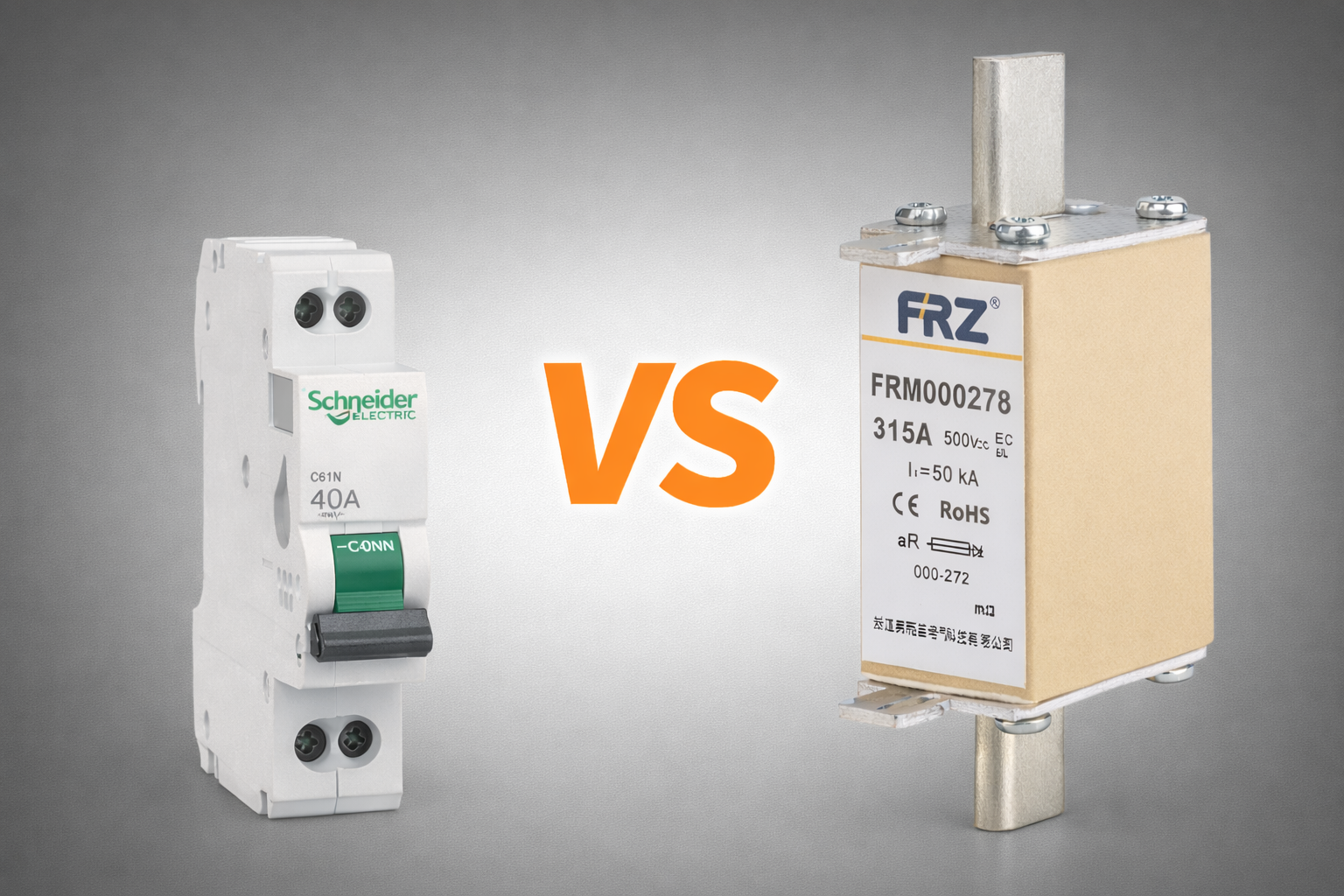
Both circuit breakers and fuses are widely used for electrical protection, but they serve different purposes depending on system requirements.
A circuit breaker is a reusable mechanical device designed for convenience and repeated operation.
A fuse is a one-time protection device that reacts extremely fast during fault conditions.
In high short-circuit applications, fuses provide:
Faster fault interruption
Lower let-through energy
Better protection for sensitive equipment
The comparison below shows how different solutions can achieve similar protection goals in industrial systems.
Selecting the right protection device should always be based on system design, fault level, and safety requirements.
In practical applications, circuit breakers and fuses are often used together rather than as direct replacements.
For example:
In EV charging systems, DC fuses are used for fast short-circuit protection, while circuit breakers are applied for system isolation and maintenance.
In PV and energy storage systems, fuses help protect batteries and power electronics from high fault currents.
In industrial power distribution, circuit breakers provide operational flexibility, while fuses ensure reliable backup protection.
Understanding the role of each device helps engineers design safer and more efficient protection systems.
When selecting a fuse, key factors such as rated voltage, current, breaking capacity, and application environment must be considered.
Working with an experienced fuse manufacturer ensures that protection devices are properly matched to system requirements and international standards.

We use cookies to enhance your browsing experience, serve personalized ads or content, and analyze our traffic. By clicking "Accept All", you consent to our use of cookies.
 EN
EN ES
ES